Robot arms that keep running when parts change
Supplier variation, mixed infeeds, and shift changeovers are daily realities on the factory floor. EmbodyX lets your robot arms adapt without a re-teach cycle each time.
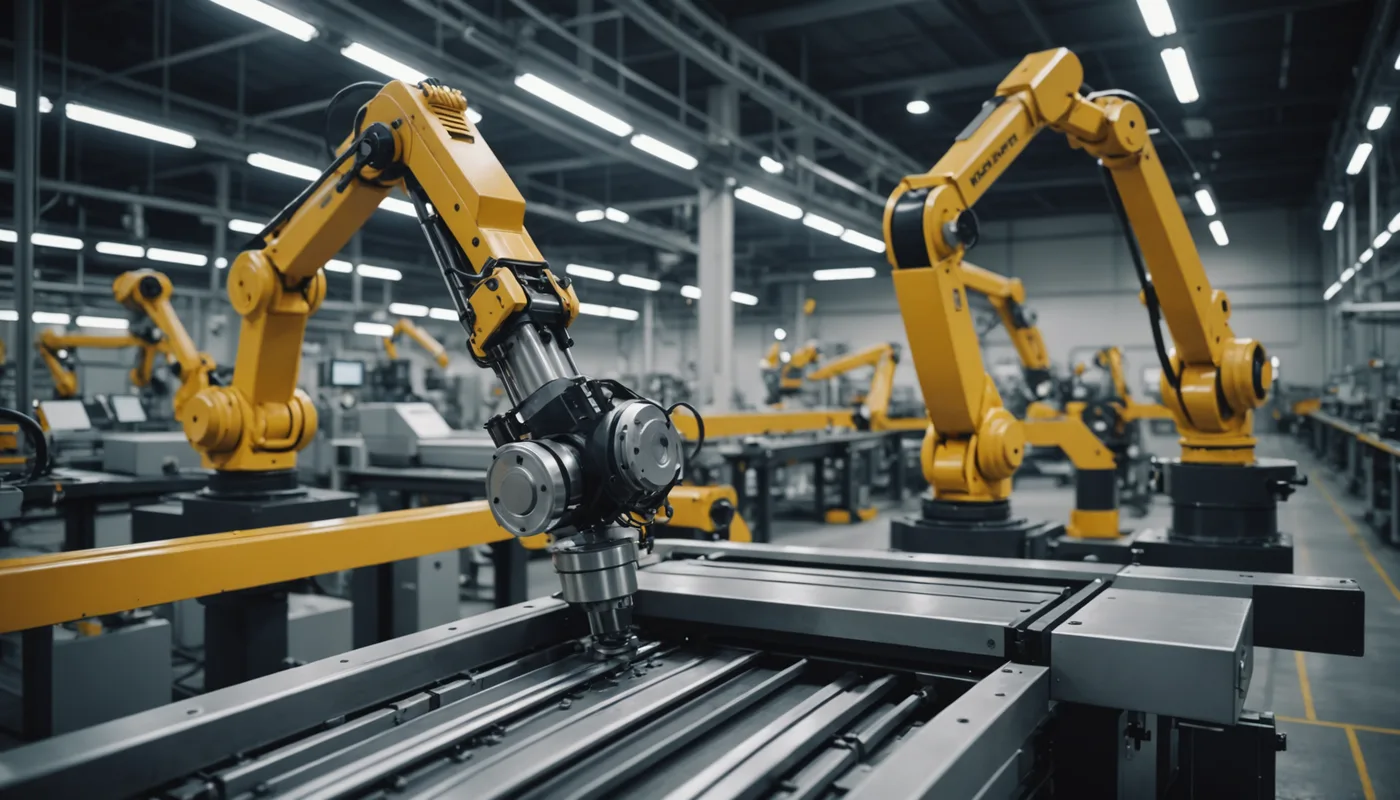
Where scripted automation breaks on the floor
Part variation between supplier batches
A scripted robot expects parts at exact coordinates. When a new supplier batch arrives with tolerances 2mm off, the arm misses. Re-teach takes hours. On a Monday-morning shift start, that means line stop before the first piece runs.
Mixed-bin grasping with unknown orientations
Traditional vision systems require a known part pose to trigger the programmed grasp pattern. Random bin contents with no consistent orientation break the pattern. The robot stops, flags an error, waits for a person to clear it.
Task changes between product runs
Switching from sorting M8 bolts to M10 bolts requires a new program, new teach points, and a test run. In facilities running multiple products per shift, the re-teach overhead compounds until automation is avoided entirely for short runs.
Perception-first, instruction-driven
Instead of scripting every motion, EmbodyX describes the task in natural language and lets the VLA model figure out the motion. The model perceives the current state of the scene and generates motion commands fresh each cycle.
Scene capture
The RGB-D camera captures the current bin state. The perception layer builds a 3D point cloud and scene embedding, noting object positions, shapes, and relative relationships.
Task conditioning
The operator's natural-language instruction is tokenized and combined with the scene embedding. The task context (for example: "pick the largest cylinder and place it in the red tray") conditions every decision the model makes.
Action generation
The VLA model generates a joint-space trajectory at 25 Hz. The OEM adapter module translates the trajectory into the arm's native motion protocol, whether that is FANUC Karel, KUKA KRL, or UR Script.
Failure detection and recovery
If the grasp fails, the camera detects the new state (part dropped, slipped, or rotated) and the model replans automatically within the same cycle. No line stop, no operator alert for standard grasp failures.
What manufacturing customers measure
Based on internal benchmarks across 3 pilot facilities, 6-week evaluation periods.
Unplanned downtime
Reduction in arm-related line stoppages versus the scripted baseline, measured over the 30-day pilot window.
Novel-object grasp success
Grasp success rate on objects outside the original training distribution, measured across 500 internal benchmark trials per arm type.
Task changeover time
Time to update the task instruction when switching product variants, in place of a 4-8 hour re-teach cycle.
Test it on your assembly line
The 30-day free Evaluation tier runs on a single arm. Bring your specific bin-picking or assembly task. We support FANUC, KUKA, UR, and ABB arms out of the box.