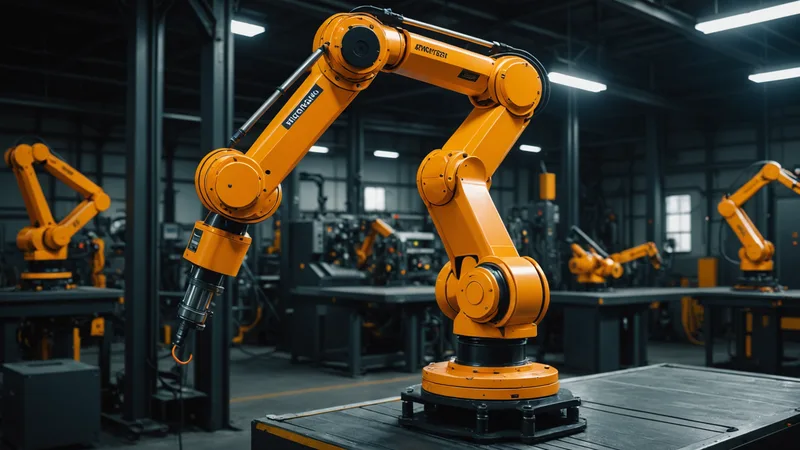
There is a pattern I noticed years before we started EmbodyX, when I was spending time in manufacturing facilities working on perception systems. Monday morning, specifically early Monday morning, had a disproportionate share of robot fault events. The data was consistent enough that maintenance teams at some facilities just planned for Monday-morning interventions as a regular operational cadence. That is a quiet admission that the systems were fundamentally fragile: they required a reset at the boundary of any operational discontinuity.
The Monday-morning failure pattern is not random. It is a predictable consequence of what rule-based robot systems fundamentally require to function. Understanding the root cause is important because it shapes what kind of solution actually addresses the problem versus what just papers over the symptoms.
The Accumulated Drift Model
Robot programs assume a fixed world. The teach points you recorded assume the fixture is in position X. The vision tolerances assume the part arrives in orientation Y within a Z-millimeter range. The depth threshold for part presence detection was calibrated when the structured light sensor was new and the workspace was clean.
Over a week of operation, small things drift. A fixture that is bolted down but not precisely fixtured shifts 2mm due to thermal cycling. A new bin of fasteners arrives from the supplier with dimensional variation on the upper end of the tolerance band. Cleaning crew wiped down the workcell Sunday night and pushed a piece of fixturing 3 centimeters out of position. The weekend maintenance team ran the line on manual to clear a backlog and moved things around without precisely returning them.
None of these individually are catastrophic. The fixture shift of 2mm is within the process tolerance. The supplier variation is within spec. But the robot program does not see each condition independently. It sees the accumulated state: fixture slightly off plus part at the edge of orientation tolerance plus sensor return that is 8mm different from calibration because the workcell got cleaned. The compound state falls outside the programmed tolerance window, and the arm faults.
This is the accumulated drift model for Monday-morning failures. The robot ran fine all week because each shift started from a state that was close enough to the programmed baseline. Saturday and Sunday introduced small changes at every maintenance touchpoint. The robot on Monday faces a compound deviation that no single change would have caused alone.
The Specificity of Rule-Based Programming
There is a deeper structural issue underneath the accumulated drift problem. Rule-based robot programs are maximally specific. A teach point is not "the approximate location of the bin." It is a precise TCP pose in the robot's joint space. The orientation tolerance window is not "roughly upright." It is a parametric range around a single reference orientation, calibrated at program time.
This specificity is also the system's strength: it is why rule-based robots are highly repeatable and precise under controlled conditions. The same specificity is why they are fragile under variation. The program is maximally matched to the exact conditions of its commissioning. Any departure from those conditions is handled by exception logic: tolerance windows, retry attempts, error codes. When the departure exceeds the exception logic's coverage, the system stops.
The problem is that real production environments generate variation continuously. Parts vary within spec. Fixturing shifts over time. Operators adapt the physical environment in ways that were not anticipated by the program author. The exception logic can cover the common variation patterns that were known at commissioning time. It cannot cover the novel combinations that arise from accumulated change over months of operation.
This is not a failure of implementation. The engineers who programmed the system did their jobs correctly within the constraints of the programming paradigm. The paradigm itself is structurally limited in how it handles variation it was not designed for.
The "Just Add More Tolerances" Non-Solution
The typical response to Monday-morning failures is to widen the tolerance windows. If the arm is faulting on orientation deviations of plus or minus 15 degrees, change the acceptance window to plus or minus 25 degrees. If the part presence threshold is too sensitive, relax it.
This works up to a point and is genuinely the right call for adjusting a tolerance that was too tight at commissioning. But there is a ceiling. Widening tolerances beyond their functional limit causes a different failure: the arm attempts a grasp it should not attempt. A part that is genuinely mislocated outside the grasping geometry gets a pick attempt that fails, potentially damaging the part or the gripper. You trade clean fault events for messy failed attempts.
The root problem remains: the program is matching observed conditions against a stored reference, and the match degrades as the real world diverges from the reference. You can widen the matching window, but you cannot eliminate the fundamental dependency on that stored reference describing the world correctly.
What Perception-First Systems Do Differently
A VLA model does not have a stored reference state it is matching against. It processes the current scene and generates an action conditioned on what it observes right now. The fixture that shifted 2mm is not a "deviation from reference"; it is just the current fixture position, and the arm acts accordingly. The supplier part with different surface finish is not a "template mismatch"; it is just a part with certain visual characteristics, and the arm plans a grasp appropriate for those characteristics.
This does not mean VLA models are invariant to all changes. There are conditions that will push the model into low-confidence or failure states: extreme occlusion, lighting changes that completely alter the visual appearance of the workspace, tasks that require sub-millimeter precision that the base model cannot deliver without fine-tuning. These are real limits.
The difference is that VLA models do not accumulate drift failure in the same way. There is no stored reference state to drift away from. The model generates behavior from the current observation on each cycle. Small changes in the world produce small changes in the model's output, not sudden boundary crossings that cause fault events. The behavior degrades gradually as conditions become more extreme, rather than failing sharply when a tolerance boundary is crossed.
Diagnosing Whether You Have a Drift Problem
If your robot failures cluster around shift boundaries or production restarts, you likely have an accumulated drift problem. Specifically: Monday mornings, the first hour after a holiday shutdown, the first production run after a scheduled maintenance window. If the failures are more uniformly distributed across operating time, the cause is something else: mechanical wear, sensor degradation, a specific part variant that is systematically outside tolerance.
For shift-boundary clustering, the question is what changed during the downtime. Run through the checklist: was fixturing touched during maintenance? Did the cleaning crew access the workcell? Was a new lot of parts loaded? Did anyone move anything? In most cases you will find a physical change that correlates with the failure onset. That tells you the system's sensitivity to environmental change is too high relative to the variation that normal operations introduce.
That is fixable with a perception-first architecture. It is not fixable by tightening maintenance procedures alone, because some of the variation is inherent to normal operations, some is from suppliers, and some is from the physical environment doing what physical environments do over time: shifting, settling, and changing in small ways that individually do not matter but collectively push a brittle system over its limit.
We are not saying rule-based systems are the wrong choice for all applications. For high-precision assembly in a rigidly controlled cell with stable fixturing and a narrow, stable part set, well-maintained rule-based programming is reliable and appropriate. The argument here is narrower: the Monday-morning failure pattern is a specific, diagnostic sign of a mismatch between the system's architectural assumptions and the operational environment's actual behavior. Recognizing that pattern is the first step toward addressing the right root cause.